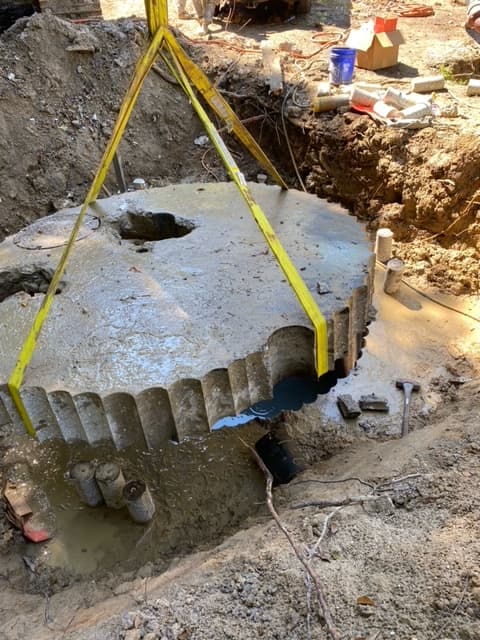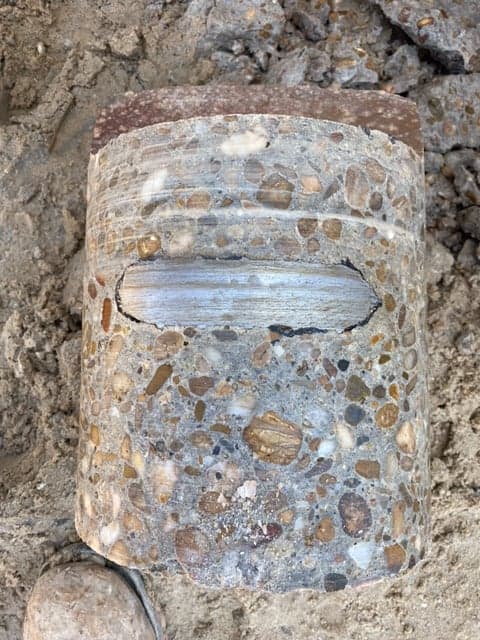
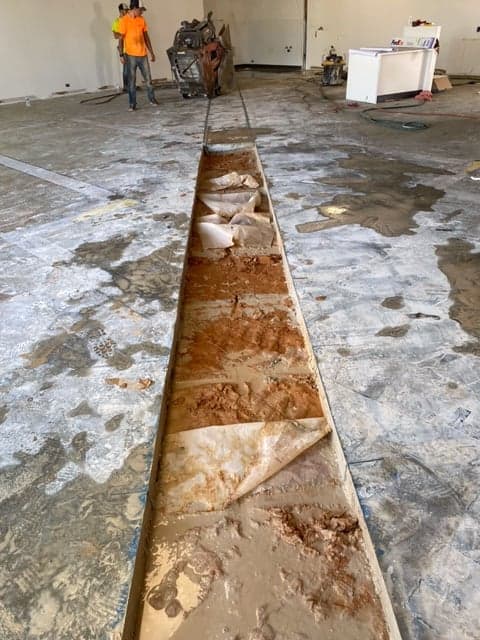
"Concrete cutting" is not one method — it is four. Flat sawing, wall sawing, wire sawing, and hand sawing each exist because they solve a different problem. Pick the wrong one and you get a slow, sloppy cut. Pick the right one and the job is clean, square, and on schedule. Here is how to tell them apart.
Flat sawing — horizontal surfaces
Flat sawing (also called slab sawing) uses a walk-behind saw to cut horizontal concrete: floors, pavement, parking decks, and bridge decks. It is the workhorse of the trade.
- ▸Best for: utility trenching, slab removal, expansion and control joints, long straight runs
- ▸Depth: up to about 24 inches in a single pass
- ▸Power: diesel for outdoor and deep work, electric for indoor and emissions-sensitive sites
If the cut is on a surface you can walk on, flat sawing is almost always the answer.
Wall sawing — vertical and overhead
Wall sawing mounts a diamond-bladed saw to a track bolted to the concrete and drives it hydraulically. That track is what makes perfectly straight, square cuts possible on vertical walls, overhead slabs, and beveled surfaces.
- ▸Best for: new door and window openings, HVAC and mechanical penetrations, foundation cuts, full wall removal
- ▸Depth: up to about 30 inches in a single pass
- ▸Bonus: low vibration protects adjacent finishes, glass, and equipment
We have used the same track-mounted setup to cut 2-foot-thick concrete walls inside Ingalls Shipbuilding in Pascagoula — about as demanding as industrial cutting gets.
When you need wire or hand sawing
- ▸Wire sawing cuts sections too thick or oddly shaped for a blade — think bridge piers, mass foundations, or anything several feet thick.
- ▸Hand sawing handles tight-access work where a track or walk-behind simply will not fit.
A good cutting contractor brings all four so you are not hiring a different sub for every cut.
The rule that applies to all of them
Whatever the method, every structural cut starts with a GPR scan. We locate rebar, post-tension cables, and conduit before the blade touches the surface — because a clean cut through a hit PT cable is still a six-figure problem.
Not sure which method your project needs? Tell us the scope and we will spec it for you. Request a quote or call Rocky directly — one crew, every cut method, across the Gulf Coast.
Need concrete cutting or scanning?
Talk to Rocky directly for a fast, accurate quote across the Gulf Coast.